When the Piping Has to Match: A U.S. Search Guide to Indian Tailors
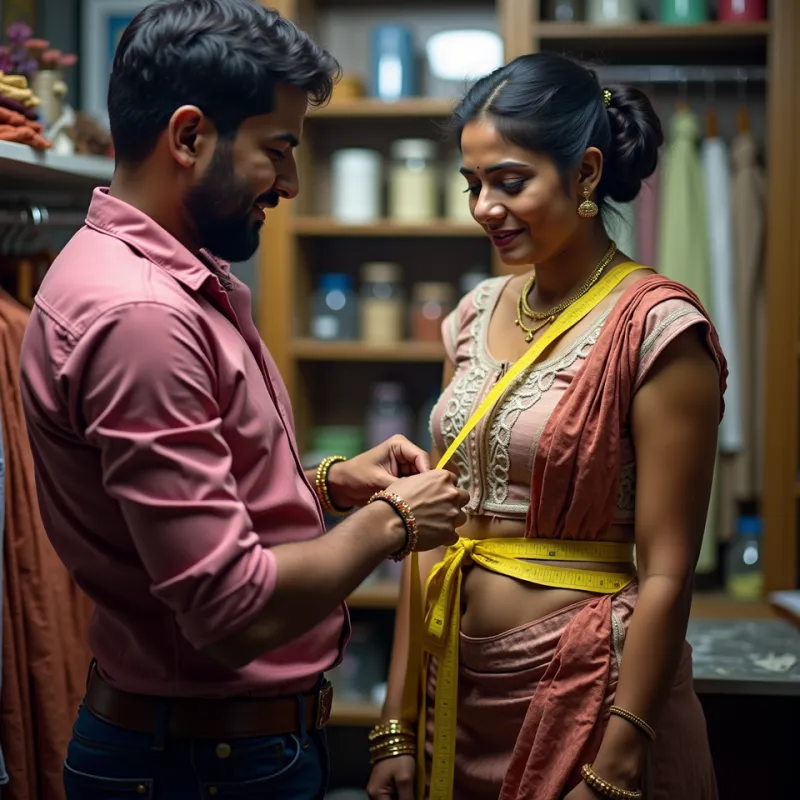
Photo: Generated using FLUX 1.0 model using Forge UI, Public domain, via Wikimedia Commons
A sari blouse is not a difficult garment to describe. It is a difficult garment to trust a stranger with. The armhole has to sit right, the lining has to breathe, the back closure has to lie flat, and the piping—if there is piping—has to match in a way that no generic alterations shop will instinctively understand.
That is the blind spot. You search for tailors near you, and the results are dominated by dry cleaners, suit hemmers, and bridal boutiques that may be excellent at what they do but have never drafted a blouse from scratch. The Indian tailor who can do the job in your city might have a storefront in a strip mall, a Facebook page last updated in 2024, and a phone number that only works on WhatsApp.
At MySearchIndia, we think of this as a search problem first and a sewing problem second. Here is how to close the gap.
Start with the garment word, not the map
Generic queries like tailor near me are too broad. Search the way the garment is actually described in the community. Try combinations such as sari blouse stitching, blouse alteration, lehenga alteration, salwar kameez tailor, churidar fitting, and Indian tailor plus your city or metro area. Then add the neighborhood names where Indian groceries, temples, and fabric shops cluster—not just downtown.
Do not be afraid of transliteration. A tailor may advertise as darzi, tailor, stitching center, or boutique. In some cities, the useful reviews are written in Hindi, Gujarati, Tamil, Telugu, Bengali, or a mix of English and another language. Search both the English term and the community term. A listing that looks thin in English may be well documented in another script.
One more search habit: look for garment-specific phrases in reviews. Blouse fitting, padding, back hooks, armhole, lining, fall and pico, and latkan are stronger signals than a five-star review that says great service.
Read the reviews like a fitting
Mainstream review sites are not useless, but they are incomplete. A tailor can have a perfect rating from customers who needed a suit jacket shortened and still be the wrong person for a bridal lehenga. Read for specificity. Did the reviewer mention a blouse that fit on the first try? A rushed festival deadline? A measurement session that took twenty minutes? A tailor who understood a back-opening design without a reference photo?
Check dates. A cluster of glowing reviews from many years ago tells you the shop existed, not that it is still good. Look for recent photos of work, not just storefront photos. If reviews mention language, parking, or whether the tailor works from home, that is useful local context, not noise.
And read the negative reviews carefully. One complaint about a missed deadline during wedding season is a warning. Several complaints about the same issue—armhole tightness, uneven hem, no pickup communication—are a pattern.
The WhatsApp-only red-flag test
Many legitimate Indian tailors run their business through WhatsApp. That alone is not a red flag. The red flag is a listing that is only a phone number and a profile photo, with no address, no storefront, no posted hours, and no way to verify that the person behind the number has ever stitched for anyone else.
Before you hand over fabric, ask for an address and an in-person measurement. A real tailor will usually want to measure you or at least inspect the reference garment. Be cautious if someone insists on full payment upfront, refuses to give a written pickup date, or gets vague when you ask who will actually cut and stitch the garment. A deposit is normal. A demand for the full fee before any work begins is not.
Also ask whether the shop does the work on site or sends it out. Both can be fine, but you want to know. If the answer changes between messages, walk away.
Use the community board, then cross-check it
Some of the best leads never appear in a search engine. They appear on the bulletin board at an Indian grocery, in a temple newsletter, in a cultural association email thread, or in a local desi Facebook group. Search those groups for tailor recommendation plus your city. Read the replies, not just the original post. The names that come up repeatedly from different people are worth calling.
Fabric stores are another underused source. The person behind the counter at an Indian fabric shop often knows exactly who stitches blouses in the area. Ask for two names, not one, and ask what kind of work each person is best at. Bridal alterations and everyday salwar kameez adjustments are not always the same skill set.
Once you have a name, cross-check it. Does the tailor appear in more than one place—a storefront listing, a community recommendation, a review with a photo? A single recommendation from a stranger is a lead. Three independent recommendations are a signal.
Ask the measurement questions before the deadline
Bring a garment that already fits well, even if it is not the one you need altered. Ask how the tailor takes measurements: bust, waist, shoulder, armhole, blouse length, sleeve length, and back closure. For a lehenga, ask about waistband fit, length, cancan, and tassels. For a salwar kameez, ask about seat, inseam, and crotch depth.
Get the turnaround time in writing—even a WhatsApp message counts—and confirm the pickup date. Then build in a buffer. Wedding-season timelines are not the same as ordinary alteration timelines. If the tailor says two weeks, ask what happens if the first fitting needs a tweak.
A low-stakes test is smart. Before you trust someone with bridal fabric, give them a simple alteration—a hem, a side seam, a blouse hook. You will learn more from one small job than from ten phone calls.
The short version
Search by garment and community term, read reviews for fitting details, verify the address and the measurement process, and treat a WhatsApp-only listing as a question to investigate rather than an automatic no. The right tailor may not rank on the first page. But with a little local cross-checking, you can find someone who knows why the piping has to match.