Two Alphabets by Saturday Noon: How to Find and Vet a Heritage Language Class for Your Kid
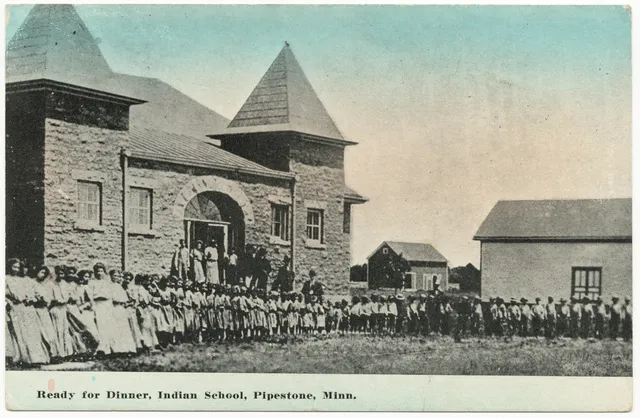
Photo: Unknown authorUnknown author, Public domain, via Wikimedia Commons
Every August, thousands of Indian-American parents open a browser and type the same three words plus their city. And every August they get the same half-dozen results, one of which still advertises registration for a school year that ended before their child was born.
Here is the inconvenient truth about heritage language classes in the United States: the shortage is not in classrooms. It is in listings.
A temple in the suburbs runs a Sunday Tamil class with four levels and a waiting list. A Telugu association chapter holds Badi every other Saturday. A retired teacher takes eight kids in her living room. A Hindi Vidyalaya has met in the same middle school for nineteen years. Most of these are findable — but only if you search like someone who knows the page is probably stale.
The Listings Aren't Wrong, They're Old
Heritage language programs are run by volunteers, temples, cultural associations, and small nonprofits. Nobody on staff owns the website. Nobody's performance review mentions search rankings. Enrollment happens through a flyer, a group chat, and a person named in a phone tree.
So adjust your goal. You are not searching for programs. You are searching for programs, then dating them, then verifying them. Three separate jobs.
Four Places These Classes Actually Live
Temples and cultural centers. Sunday school, bal vikas, and language tracks attached to a temple's youth programming. Search the temple name plus 'classes,' 'youth,' or 'bal vikas' — the language class is often buried three pages deep.
Standalone weekend schools. Tamil Sangam schools, Telugu Badi and Telugu association youth programs, Hindi Vidyalaya, Gujarati Pathshala, Malayalam school programs. These tend to have the most structured curricula and the least maintained web presence.
Universities and community colleges. Continuing-education departments sometimes run Hindi or Urdu for adults and, less often, a children's track. University student associations also run informal volunteer classes that never appear in any directory.
Individuals and online tutors. Local teachers taking small groups, and platforms where you can book one-on-one instruction. This is often the fastest route for a child who already reads the script and needs conversation practice.
One angle most parents miss: your public school district may offer credit-by-exam or a Seal of Biliteracy pathway. Search your state's name plus 'Seal of Biliteracy' plus the language. It changes what you should be asking a weekend program to prepare for.
Queries That Beat the Obvious One
- 'Tamil school' plus your city, and separately 'Tamil Sangam' plus your city.
- 'Telugu Badi' plus your city, or the Telugu association chapter name.
- 'Hindi Vidyalaya' plus your city, and 'Hindi school Sunday' as a fallback.
- 'Bal Vikas' plus your city.
- The language plus 'heritage language program' plus your county.
- A platform-scoped search: site:facebook.com plus 'Telugu classes' plus your city. A great deal of this information lives only on a Facebook page.
- Add the current academic year as a word in the query. It is crude, but it drags recent pages upward and filters out the decade-old ones.
Compare Curricula Before You Compare Prices
Ask any program for last year's syllabus. Then ask four questions.
Does the child learn the script, or only to speak? These are different products and parents frequently want different ones. Decide which you want before you start comparing, or you will keep chasing the wrong program.
Is there a path, or a loop? A serious program has levels — first-year through fourth-year — and can tell you what a child knows at the end of each. A program that restarts the alphabet every September is a babysitting service with flashcards.
What is the assessment, if any? External benchmarks help: language exams run by cultural organizations, credit-by-exam, the Seal of Biliteracy. Ask whether the program prepares students for any of them.
How big is the class? Twelve kids to one volunteer is a craft project. Eight kids to one trained teacher is a class.
Vet the Teacher, Not Just the Brand
A temple's name on the flyer does not tell you who is standing in front of the room. Ask directly: who teaches, what is their teaching background, have they taught children before, and what is the organization's policy on background checks for volunteers who work with minors.
That last question is not rude. A room full of eight-year-olds warrants it. Programs that take child safety seriously answer it immediately and in detail. Programs that get defensive have told you something too.
Also ask whether parents may sit in on one session. Almost every good program says yes.
The Stale-Listing Tell-Tales
- A copyright year or a registration page naming a school year that has already ended.
- A Facebook page whose most recent post is more than eight months old.
- A contact form with no phone number anywhere on the site.
- A map listing whose posted hours contradict the website, or that reads 'temporarily closed.'
- A registration link that returns an error page.
- An address that resolves to a residence or a mailbox store.
- Pricing that appears nowhere, ever.
Two or three of these together usually means the program has paused, moved, or changed hands.
Verify in Two Calls, Not Ten
Call the temple or association front desk and ask one specific question: 'Is the Sunday Hindi class running this year, who runs it, and can I get their number?' Front desks know. Volunteer programs often exist as a single phone number held by one dedicated person, and that person is delighted to be asked.
If the first call yields nothing, ask the Indian grocery, the dance school, or the aunty who runs the WhatsApp group. Community referral remains the highest-signal search engine available to you.
Timing, Cost, and the Tuesday Problem
Registration for most weekend programs opens in late summer for a September start and follows the school year through spring. Temple-run classes are often cheaper than private tutoring; expect a wide range, from a modest annual fee to per-hour tutoring rates. The real cost is the commute. A forty-minute drive each way for a ninety-minute Saturday class is a family decision, not a scheduling detail. Ask about sibling discounts, carpool arrangements, and whether any section is hybrid — some programs kept a remote option after 2020.
The Goal Is Fit, Not Enrollment
Give this two weekends. Search the four categories, run the smarter queries, call the two most promising, and sit in on one class. What you are looking for is not the most impressive website. It is a teacher your child will tolerate at 9 a.m. on a Saturday, in a room close enough that you will still be going in February.
That is the whole search. It just takes longer than typing three words and believing the first page.