Twelve Ramachandrans and One Grandfather: Search Tactics for Indian Family Records in U.S. Archives
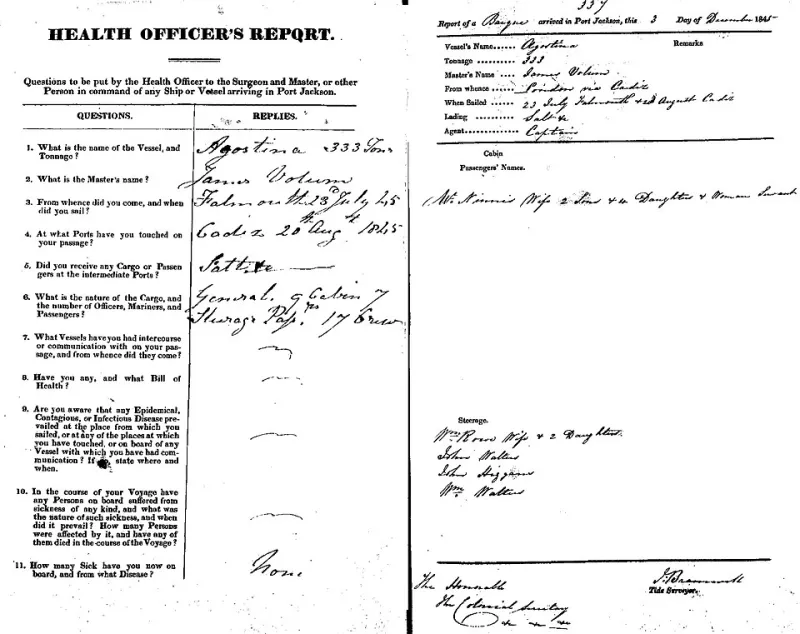
Photo: Unknown authorUnknown author, Public domain, via Wikimedia Commons
The first time you search a family name like Ramachandran in a genealogy database, the screen behaves like a crowded railway platform. Everyone is waving. Twelve men have the same name. Three have the same birth year. Two claim the same port. One is your grandfather, and the search engine has no idea which one.
This is the central problem of Indian-American family research: not a shortage of records, but a surplus of ambiguity. The fix is not a premium subscription. It is search craft. You build a cluster of facts, then use each search to eliminate the wrong people.
Build a Fact Cluster Before You Type
Do not start with the name alone. Start with a page of facts you can defend: name variants, approximate birth year, village, district, state, father's name, spouse's name, arrival port, arrival year, occupation, last known U.S. address, and naturalization date if you have it. Add the names of siblings who may have traveled with him.
Then search for pairs, not single words. A query like 'Ramachandran 1901 Madras' is weak. A query like 'Ramachandran' 'Tanjore' '1901' 'New York' is a filter. The goal is not one record. The goal is two independent records that agree on the same cluster.
Where the Free U.S. Records Actually Sit
The National Archives Catalog is free and searchable, though many passenger lists and naturalization records are not indexed by name. FamilySearch is free with an account and has strong image collections, including some India records. The Ellis Island and Castle Garden databases cover New York arrivals. Chronicling America has digitized U.S. newspapers that often printed arrival notices, naturalization notices, and community events.
For naturalization, search county court records as well as federal records. The USCIS Genealogy Program can provide copies of certain historical files for a fee, but it is not a search engine; you need enough detail to request the right file. Local public libraries often provide free access to paid databases like Ancestry or NewspaperArchive from the building or through a library card. Use those before you pay for a subscription you may not need.
Ship manifests are the classic trap. The name may be spelled phonetically, the age may be off by two years, and the 'race' column may use a historical term that no one uses today. Search the port and year, then browse images if the index fails. A manifest is not just a name. It is a line with an occupation, a last residence, a destination, and a nearest relative. Those details are the real search terms.
Query Craft for Common Names
Use quotation marks around exact phrases. Use OR to catch spelling variants: 'Ramachandran' OR 'Ramchandran' OR 'Ramachandra'. Use site: to search within archives and newspapers: site:archive.org 'passenger list' 'Madras'. Use filetype: occasionally, though archives rarely expose clean PDFs.
Try initials, because manifests and certificates often abbreviated. Try the village name in quotes with the word native. Try 'hailing from' and 'resident of' in newspaper searches. Try the U.S. address plus the name, because city directories and census records can confirm a person even when the arrival record is missing.
Do not trust wildcards. Many search engines do not support them well. Instead, run the same query with and without the final syllable of the name. Indian transliteration is not a bug in your searching; it is the terrain.
The Indian Side Is Thinner Online
Civil registration in India varies by state and district. Some birth, death, and marriage records are digitized and searchable; many are not. District registrar offices, municipal offices, and state archives hold paper indexes. The National Archives of India and state archives have their own catalogs. FamilySearch has some India collections, and the British Library's India Office Records are valuable for earlier periods, especially through finding aids and the Families in British India Society.
Village registries are often maintained at the local level. A panchayat office or registrar may have a ledger that has never been photographed. Gazetteers can help you confirm a village's name and district, which matters because districts and spellings have changed. Indian newspaper archives exist, but many are paywalled or only partly indexed. Search the newspaper's own archive before you assume the story is lost.
When to Write to a Registrar
Write when the record is not indexed, when the name is too common for a keyword search, or when you need a certified copy. Write when you have an exact date range and place, because a registrar cannot search all of Tamil Nadu for a Ramachandran. Write when a search engine has given you a lead but not a document.
A good letter or email includes your full name, your relationship to the person, the exact record you want, the date range, the village and district, the parents' names if known, and the purpose of the request. Ask whether there is an index search first. Ask about fees and processing time. Include a postal address and, if the office accepts it, a self-addressed envelope. Keep copies of everything. Expect weeks or months, not minutes.
A Calmer Search Loop
Search, log, cluster, repeat. Keep a research log with the query you ran, the database you used, and the result. Do not merge someone else's family tree into yours just because the name matches. Do not treat a single manifest line as proof of identity. Look for the second record that agrees on the village, the father's name, or the spouse.
That is the MySearchIndia lens in practice: search is not a magic lookup, it is a chain of small, checkable clues. Your grandfather was not the only Ramachandran on the ship. But with enough clustering, he is the one the records can finally pick out.